Historic financial closing fully funds $3.2 billion Phase One construction program
The Alabama Toll Road, Bridge and Tunnel Authority has completed the bond and federal loan financing necessary to fully fund the $3.2 billion Phase One construction of the Mobile River Bridge and Bayway Project, clearing one of the final major milestones before full construction begins.
The financing includes a Transportation Infrastructure Finance and Innovation Act (TIFIA) loan of $2.52 billion through the U.S. Department of Transportation’s Build America Bureau, along with bonds successfully marketed to investors this month.
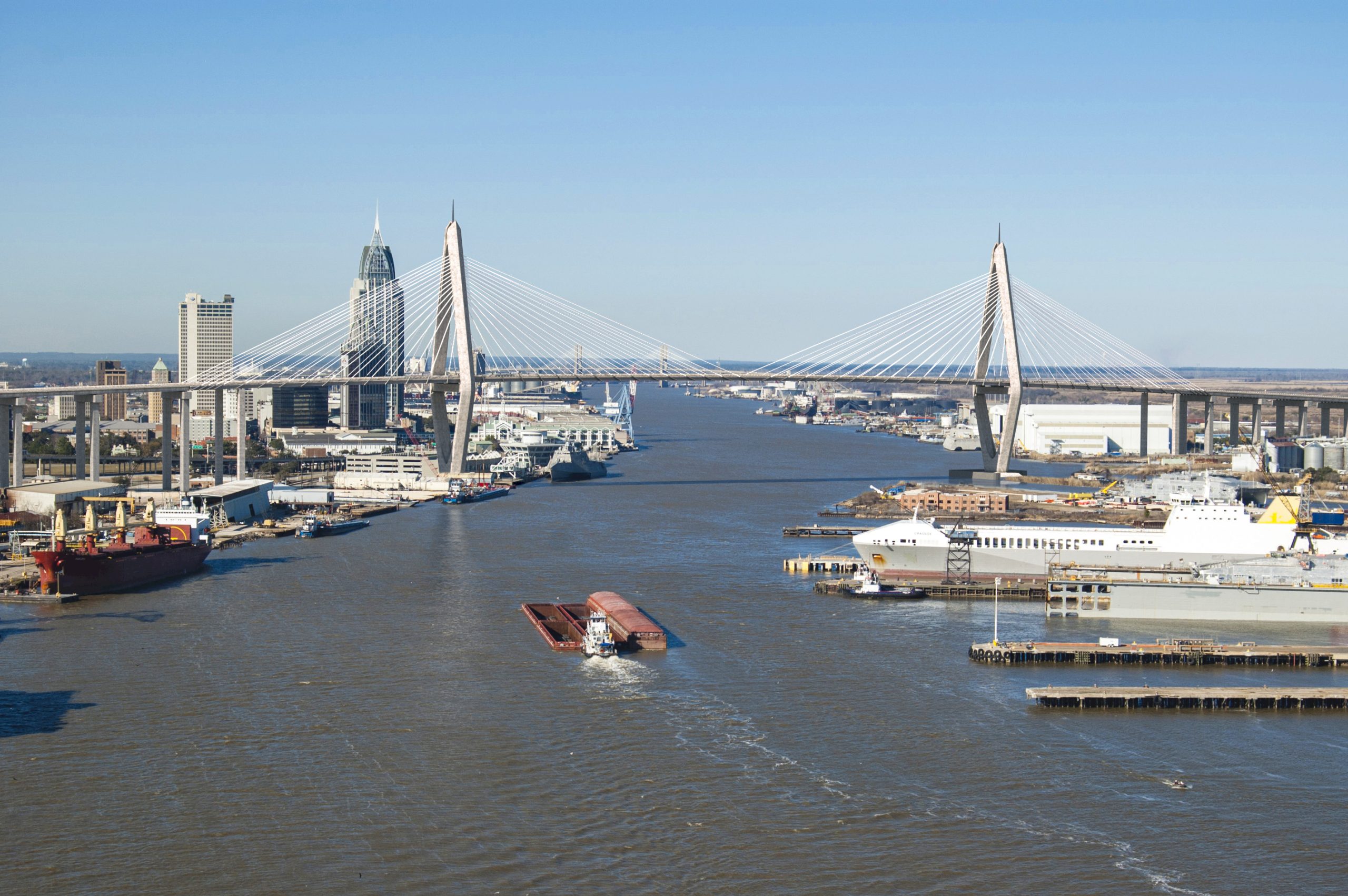
The financing fully funds the agreed-upon $3.2 billion Phase One construction cost, which includes a new six-lane cable-stayed bridge across the Mobile River and six lanes of capacity across the existing Bayway.
The financial closing follows years of work by the State of Alabama, ALDOT, the Authority and federal partners to develop a financially viable project. Federal participation includes the TIFIA financing, a $550 million Bridge Investment Program grant and a $125 million Infrastructure for Rebuilding America (INFRA) grant, along with significant state investment.
“President Trump and Secretary Duffy are once again proving this Administration is dedicated to making generational change across the country, and this major infrastructure investment in Alabama’s Gulf Coast will make monumental improvements for travel and commerce across the region. This advancement marks the final piece needed for the decades-awaited Mobile River Bridge and Bayway project. Once it is completed, this project will finally alleviate our traffic gridlock across Mobile Bay,” said Alabama Governor Kay Ivey. “Thank you, again, to the Trump Administration for investing in our state. Alabama is proud to be part of the Golden Age of Transportation.”
“This is the point where years of planning become construction,” Transportation Director John Cooper said. “The financing is in place, the construction price is established, and we’re ready to build. The support and flexibility provided at the federal level have been extraordinary and were essential to getting us here.”
The Trump Administration and USDOT worked closely with Alabama to preserve the project as escalating construction costs and engineering challenges made the previously planned simultaneous replacement of the bridge and Bayway financially unachievable. Federal flexibility allowed Alabama to divide the project into phases while preserving the long-term commitment to replace the Bayway. This phased approach has become more common with megaprojects across the country.
Phase One will construct the new Mobile River Bridge and connect it to the existing Bayway, which will be modified to provide three travel lanes in each direction. Approximately one mile of the Bayway will be reconstructed to connect to the new Mobile River Bridge, along with improvements throughout the I-10 corridor in Mobile and Baldwin counties.
The new bridge will provide an Interstate route across the Mobile River for hazardous-material freight that is prohibited from using the Wallace Tunnel and currently must travel through local streets and neighborhoods. The project is also expected to significantly reduce congestion and travel times along I-10 and improve access to the Port of Mobile.
No tolls will be collected during construction. Tolling will begin only when the new bridge and Phase One improvements open to traffic, currently projected for late 2031. The Wallace Tunnel, Bankhead Tunnel, Africatown Bridge and Causeway will remain toll-free alternatives.
The project includes an ALGO Pass rate of $3 per trip for passenger vehicles and a $60 monthly option providing unlimited crossings for frequent users.
The project was revived in 2021 at the request of the Mobile and Eastern Shore metropolitan planning organizations following the termination of the previous development effort in 2019. The current plan reflects priorities established through that local process while incorporating significant federal, State and local collaboration.
Early construction activities, including geotechnical work, test piles, site preparation and procurement of long-lead materials, are already underway. With financing complete, ALDOT expects to authorize the design-build team to proceed with full construction beginning on Oct. 1.
The new bridge and Phase One improvements are expected to open to traffic in approximately five years.
To see a press release from the U.S. Department of Transportation, click here.