I-65 photographic speed enforcement pilot test
The 2026 Alabama Work Zone Safety Act established a pilot program to test a photographic speed enforcement system in one interstate work zone. The goal is to improve safety for workers and motorists.
ALDOT and ALEA to implement the pilot in Chilton County
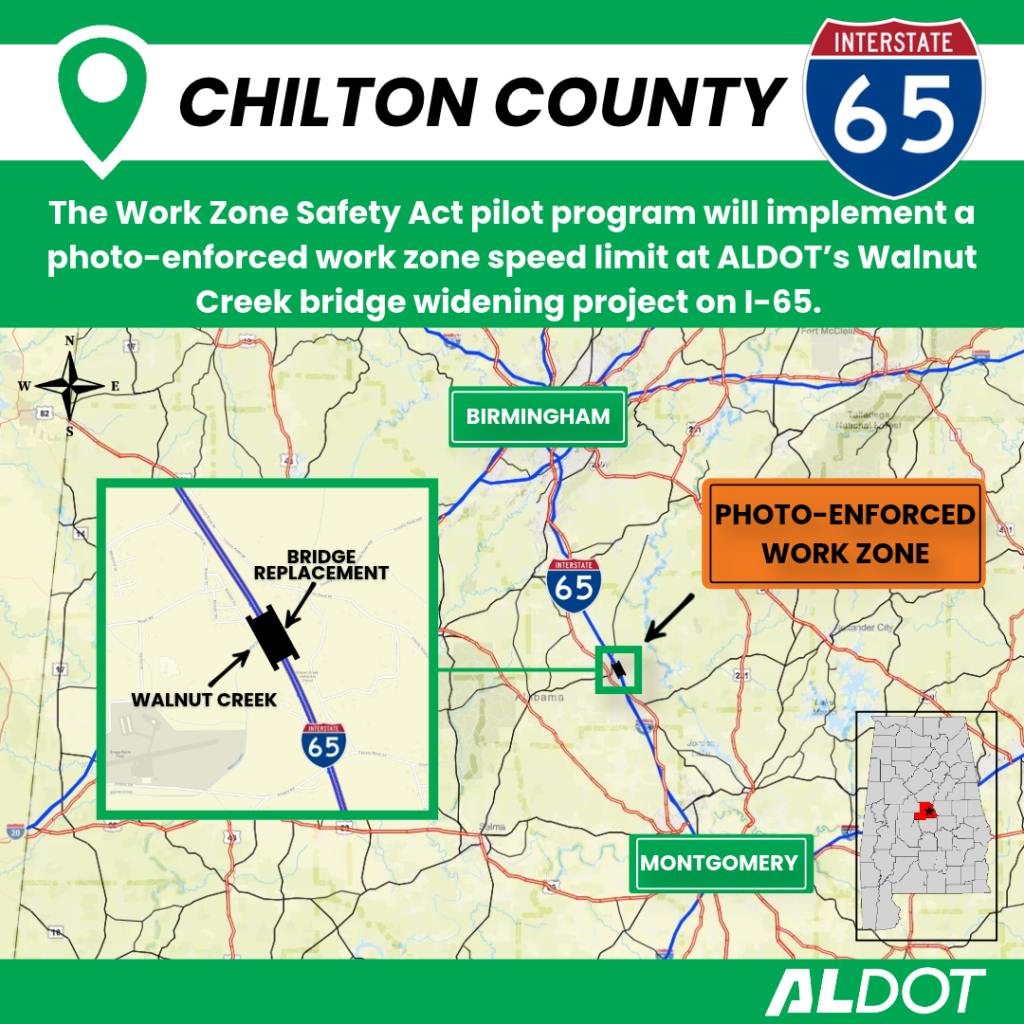
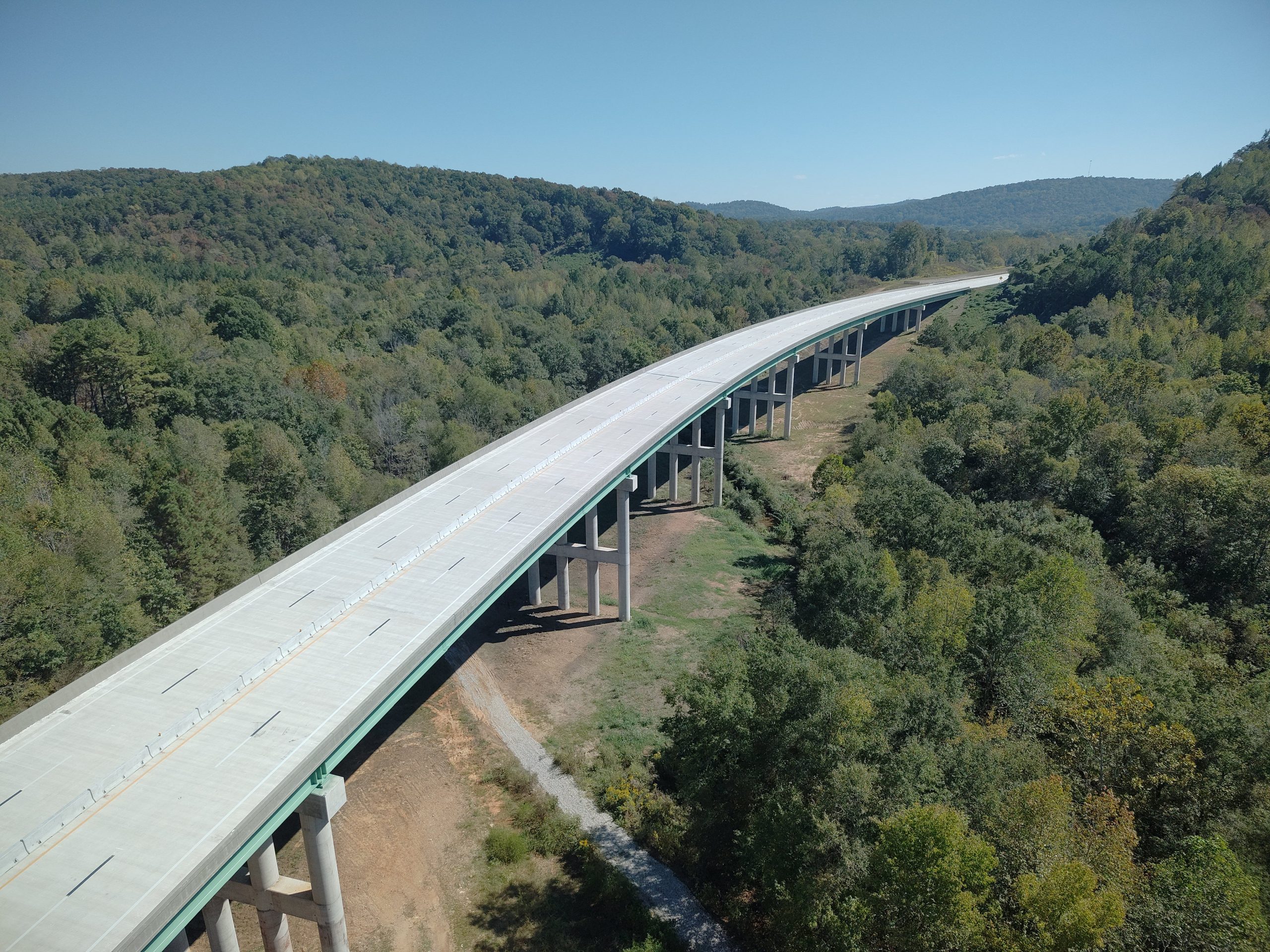
At the Legislature’s direction, ALDOT and the Alabama Law Enforcement Agency (ALEA) have partnered to implement the pilot on I-65 in Chilton County near milepost 209 and the Walnut Creek Bridge Replacement Project. Drivers approaching the area will see special signs indicating that the speed limit is photo enforced.
ALDOT manages the transportation and work zone components while ALEA handles law enforcement review and the civil citation and appeals process.
How it works
- A photographic speed-enforcement system measures vehicle speed and records evidence when a vehicle is detected above the statutory threshold.
- The system’s records are screened and made available for ALEA review only for periods when workers are present.
- ALEA reviews the evidence and may issue a civil traffic citation or a warning notice to the vehicle’s registered owner.
- The registered owner receives information about the alleged speed, date, time, location, recorded images, amount due, and available options to pay or contest the notice.
Timeline
The pilot will begin in November 2026 with the setup of equipment. Civil citations will begin no earlier than Nov. 16, 2026. The Work Zone Safety Act provides for the pilot program to continue through September 2028, unless continued by an act of the Legislature.
If you receive a notice
A notice of violation will be mailed to the registered owner of the vehicle. The notice is not a criminal charge. It is a civil matter administered by ALEA under the Work Zone Safety Act and the applicable administrative rule.
- The date, time, and location of the alleged violation.
- The alleged vehicle speed and the maximum speed applicable at the location.
- Recorded images of the vehicle involved.
- The amount of the civil penalty.
- The deadline and instructions for paying, requesting any available option, or contesting the citation, or seeking a payment extension.
- Information about the right to an administrative hearing.
What you can do
- Review the notice and the evidence carefully.
- If you accept responsibility, pay the civil penalty by the deadline shown on the notice.
- Follow the notice instructions to request an administrative hearing.
- If the vehicle was rented or leased, follow the instructions for providing renter or lessee information.
What this means for drivers
- The civil penalty does not carry criminal penalties or imprisonment.
- ALEA will not assess driver license points or suspend or revoke a driver license for a violation under the Work Zone Safety Act.
- A timely appeal follows the instructions on the notice and stays collection while the appeal is pending, as provided by the applicable administrative process.
FAQS ABOUT THIS SPEED ENFORCEMENT TEST
Highway work zones place workers close to moving traffic, and excessive speed increases the risk of serious crashes. While the goal for ALDOT and ALEA is to support safer traffic flow and increase safety where workers are present, this pilot program will evaluate the effectiveness of photographic speed enforcement to that end.
A vehicle operating more than 10 mph over the posted speed limit in the work zone while workers are present may be subject to a civil traffic citation under the Work Zone Safety Act.
Yes. The Work Zone Safety Act requires warning signs before photographic speed enforcement is used in an active work zone. The phased rollout also includes a period for driver awareness and warning notices before full enforcement may begin.
The notice is mailed to the registered owner of the vehicle at the address shown in the applicable motor vehicle registration records.
The civil fine is $250 for a speeding violation under the Act.
No. The Work Zone Safety Act provides that ALEA will not assess points against a driver license or suspend or revoke a driver license for a violation under this pilot program.
The notice will include the date, time, and location; the alleged speed and applicable maximum speed; recorded images of the vehicle; the amount of the civil penalty; and instructions explaining how to pay or contest the notice.
Yes. The notice will explain how to contest the notice and request an administrative hearing. A timely appeal stays collection of the civil penalty while the appeal is pending.
The notice will state the controlling deadline. The Work Zone Safety Act requires the payment due date to be at least 60 days after issuance. The exact deadline and available options will be printed on the notice, and additional information will be provided on the web page printed on the notice.
A hearing officer reviews whether the vehicle was operated in violation of the Work Zone Safety Act and whether the registered owner may be held liable. The hearing will take place online or over the phone and will be administrative and informal.
The Work Zone Safety Act provides for judicial review through an Alabama circuit court.
A rental car company or other registered owner may follow the instructions in the notice to provide information about the person who was renting or leasing the vehicle at the time of the alleged violation.
No. The pilot program is an additional safety tool. It is intended to support work zone safety and reduce the need for officers to perform speed enforcement in hazardous work zone conditions.
An automated system can monitor traffic and record speed and vehicle evidence across multiple lanes. A manual system is operated by a law enforcement officer and targets a particular vehicle. If both systems capture the same vehicle and the records conflict, the manual enforcement record prevails under current program procedures.
Citation processing is limited to periods when workers are present. Records from periods when workers are not present will not enter the citation workflow.